


CVE-2026-24002
pyodide sandbox option is insecure
Description
Grist is spreadsheet software using Python as its formula language. Grist offers several methods for running those formulas in a sandbox, for cases where the user may be working with untrusted spreadsheets. One such method runs them in pyodide, but pyodide on node does not have a useful sandbox barrier. If a user of Grist sets `GRIST_SANDBOX_FLAVOR` to `pyodide` and opens a malicious document, that document could run arbitrary processes on the server hosting Grist. The problem has been addressed in Grist version 1.7.9 and up, by running pyodide under deno. As a workaround, a user can use the gvisor-based sandbox by setting `GRIST_SANDBOX_FLAVOR` to `gvisor`.
INFO
Published Date :
Jan. 22, 2026, 3:15 a.m.
Last Modified :
Feb. 17, 2026, 5:59 p.m.
Remotely Exploit :
Yes !
Source :
[email protected]
CVSS Scores
| Score | Version | Severity | Vector | Exploitability Score | Impact Score | Source |
|---|---|---|---|---|---|---|
| CVSS 3.1 | CRITICAL | [email protected] | ||||
| CVSS 3.1 | CRITICAL | [email protected] |
Solution
- Update Grist to version 1.7.9 or newer.
- Set GRIST_SANDBOX_FLAVOR to gvisor if updating is not possible.
References to Advisories, Solutions, and Tools
Here, you will find a curated list of external links that provide in-depth
information, practical solutions, and valuable tools related to
CVE-2026-24002.
| URL | Resource |
|---|---|
| https://github.com/gristlabs/grist-core/security/advisories/GHSA-7xvx-8pf2-pv5g | Vendor Advisory |
| https://support.getgrist.com/self-managed/#how-do-i-sandbox-documents | Patch |
CWE - Common Weakness Enumeration
While CVE identifies
specific instances of vulnerabilities, CWE categorizes the common flaws or
weaknesses that can lead to vulnerabilities. CVE-2026-24002 is
associated with the following CWEs:
Common Attack Pattern Enumeration and Classification (CAPEC)
Common Attack Pattern Enumeration and Classification
(CAPEC)
stores attack patterns, which are descriptions of the common attributes and
approaches employed by adversaries to exploit the CVE-2026-24002
weaknesses.
We scan GitHub repositories to detect new proof-of-concept exploits. Following list is a collection of public exploits and proof-of-concepts, which have been published on GitHub (sorted by the most recently updated).
Results are limited to the first 15 repositories due to potential performance issues.
The following list is the news that have been mention
CVE-2026-24002 vulnerability anywhere in the article.

-
 Daily CyberSecurity
CVE-2026-24002: Critical Sandbox Escape Turns Grist Spreadsheets into RCE Weapons
A seemingly innocent spreadsheet formula could be the key to compromising entire organizations, thanks to a critical vulnerability uncovered by Cyera Research Labs in Grist-Core. The flaw, tracked as ... Read more
-
Daily CyberSecurity
The “Zeroplayer” Arsenal: WinRAR Flaw CVE-2025-8088 Weaponized by Spies
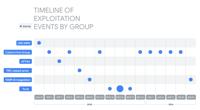
Timeline of notable observed exploitation | Image: GTIG A critical vulnerability in one of the world’s most popular file archivers has become a favorite weapon for government spies and cybercriminals ... Read more

-
 The Hacker News
Critical Grist-Core Vulnerability Allows RCE Attacks via Spreadsheet Formulas
A critical security flaw has been disclosed in Grist‑Core, an open-source, self-hosted version of the Grist relational spreadsheet-database, that could result in remote code execution. The vulnerabili ... Read more
The following table lists the changes that have been made to the
CVE-2026-24002 vulnerability over time.
Vulnerability history details can be useful for understanding the evolution of a vulnerability, and for identifying the most recent changes that may impact the vulnerability's severity, exploitability, or other characteristics.
-
Initial Analysis by [email protected]
Feb. 17, 2026
Action Type Old Value New Value Added CVSS V3.1 AV:N/AC:L/PR:N/UI:R/S:C/C:H/I:H/A:H Added CPE Configuration OR *cpe:2.3:a:getgrist:grist-core:*:*:*:*:*:*:*:* versions up to (excluding) 1.7.9 Added Reference Type GitHub, Inc.: https://github.com/gristlabs/grist-core/security/advisories/GHSA-7xvx-8pf2-pv5g Types: Vendor Advisory Added Reference Type GitHub, Inc.: https://support.getgrist.com/self-managed/#how-do-i-sandbox-documents Types: Patch -
New CVE Received by [email protected]
Jan. 22, 2026
Action Type Old Value New Value Added Description Grist is spreadsheet software using Python as its formula language. Grist offers several methods for running those formulas in a sandbox, for cases where the user may be working with untrusted spreadsheets. One such method runs them in pyodide, but pyodide on node does not have a useful sandbox barrier. If a user of Grist sets `GRIST_SANDBOX_FLAVOR` to `pyodide` and opens a malicious document, that document could run arbitrary processes on the server hosting Grist. The problem has been addressed in Grist version 1.7.9 and up, by running pyodide under deno. As a workaround, a user can use the gvisor-based sandbox by setting `GRIST_SANDBOX_FLAVOR` to `gvisor`. Added CVSS V3.1 AV:N/AC:H/PR:N/UI:N/S:C/C:H/I:H/A:H Added CWE CWE-74 Added Reference https://github.com/gristlabs/grist-core/security/advisories/GHSA-7xvx-8pf2-pv5g Added Reference https://support.getgrist.com/self-managed/#how-do-i-sandbox-documents